
Want to bookmark your favourite articles and stories to read or reference later? Start your Independent Membership today.
Already a member?
Log in
Three blockchain intelligence firms have concluded that the latest Binance hack was orchestrated by North Korean state-sponsored hackers, with an official investigation into the breach still underway.
At least $2bn was stolen on Thursday from Binance wallets in what is believed to be the world’s largest cyber attack on a crypto exchange.
While Binance and government agencies are yet to conclude their investigations, blockchain security firms TRM Labs, Chainalysis and ZachXBT have all pointed to hackers linked to Pyongyang as perpetrators of the attack.
An initial investigation suggested that a hacker could make unauthorised transactions after gaining access to a Binance engineer’s compromised laptop.
The incident comes after 2025’s hack of the Dubai-based cryptocurrency exchange ByBit, in which a historic $1.5bn was stolen by North Korean hackers.
Key to North Korea’s success in carrying out cyber attacks has been Pyongyang’s use of operatives stationed abroad, experts say.

TRM Labs said in a report on Friday that it could be stated with “high confidence” that the latest Binance attack was carried out by North Korea’s TraderTraitor hacking unit, which has been linked to the infamous Lazarus Group. The company said it based the assessment “on robust on- and off-chain intelligence”.
Jony Levin, chief of the blockchain security firm Chainalysis, also said the hack “was likely done by” the North Korean group TraderTraitor.
Cyber experts have pointed to a stark shift over the past decade in North Korea’s approach towards cyber attacks, from disruptive operations – such as the 2014 Sony Pictures attack – to stealing large sums of money from cryptocurrency wallets and central banks.
North Korean hackers have become increasingly efficient in hacking financial systems abroad and funnelling the stolen money into financing Pyongyang’s nuclear weapons programme.
Japan’s foreign ministry warned in a report last year that under North Korean leader Kim Jong Un, Pyongyang’s cyber force has expanded into a “full-scope national programme” operating at a high level of sophistication “approaching the cyber programmes of those in China and Russia”.
Since North Korea has extremely limited connectivity to the global internet, operating from China or Russia gives its hackers access to better infrastructure, as well as the cover of a foreign IP address that makes it harder to identify the source of cyber attacks.
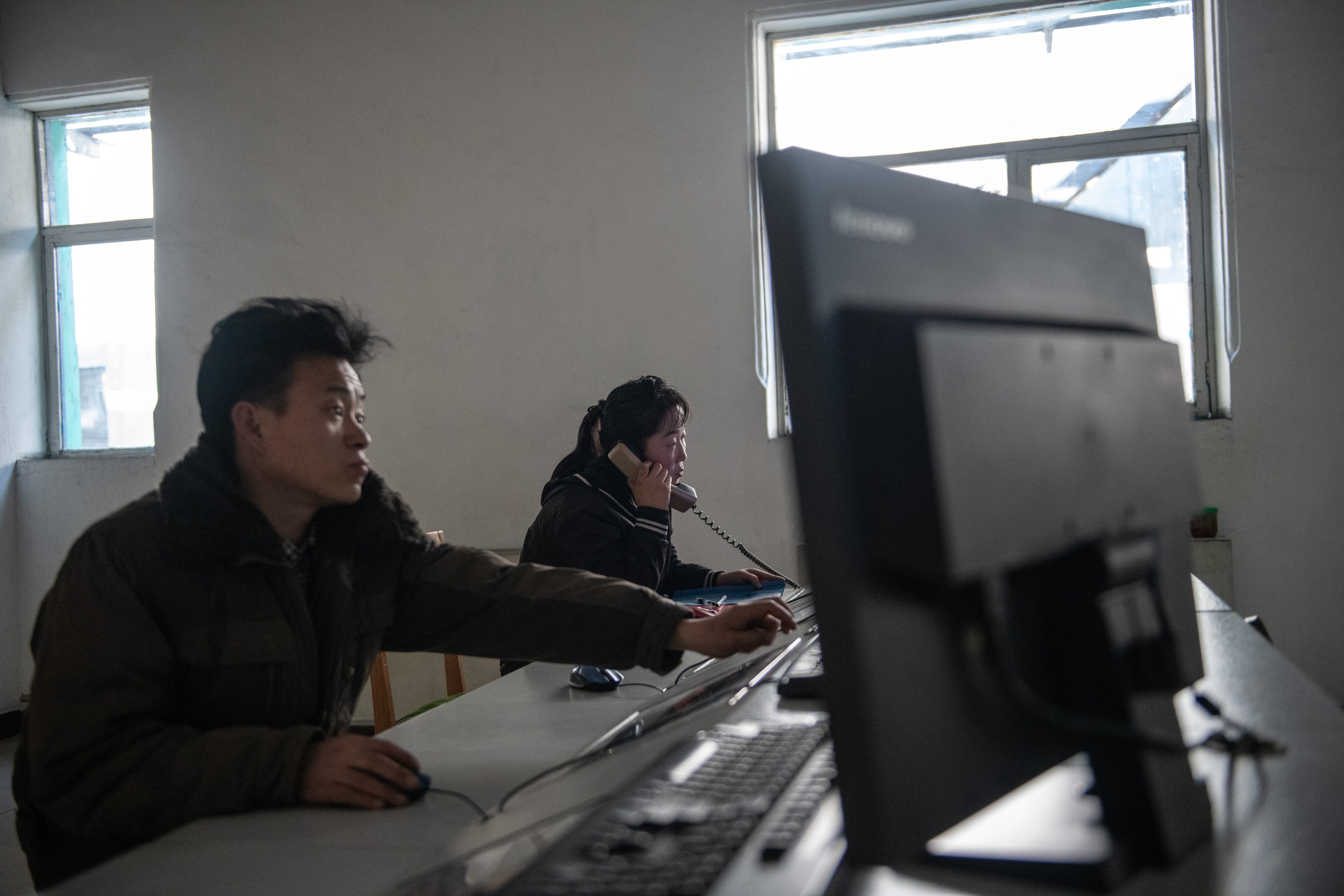
The global hacking operations are often facilitated through “networks of North Korean nationals abroad and foreign conspirators”, the Japanese foreign ministry said in the report.
Being stationed abroad also makes it easier for the North Korean hackers to work with foreign financial networks to convert stolen cryptocurrency into conventional money.
Experts warn that Southeast Asia in particular emerged as a key region in Kim Jong Un’s cyber network, working both as a target and a base of operations for Pyongyang.
North Korea has distributed malware and unauthorised access tools into the digital infrastructure of countries like Cambodia, Thailand and Indonesia, allowing for sustained concealment of its global operations, according to a report by the Centre for Strategic and International Studies (CSIS).
A 2020 report by the Centre for a New American Security, which examined North Korea’s overseas cyber network, also identified India among the countries where North Korean cyber agents operated.
Reports suggest that overall up to 6,000 North Korean cyber agents could be operating worldwide, including those stationed in countries such as China, India, Russia, Belarus and Malaysia.
These individuals assume false identities, disguising themselves as nationals of third countries to gain employment with foreign companies, according to the CSIS report.
These operatives are groomed from an early age by Pyongyang to take part in the country’s cyber warfare agenda.
Academically gifted students in North Korea are identified early and directed towards computer science and information security.
Recruits who make their way into Pyongyang’s intelligence services, such as the Reconnaissance General Bureau, are lured in with offers that are nearly impossible to obtain otherwise for North Korean nationals, including unrestricted internet and good salaries.